Buying used Link Belt equipment components online can save money, reduce downtime, and extend the working life of older machines. However, the process requires more than comparing prices. The right used link belt parts must match your machine’s model, serial number, operating conditions, and installation requirements. A part that looks clean in a photograph may still contain hidden cracks, worn bushings, damaged threads, or excessive play.
Experienced buyers begin with accurate machine information. Record the model and serial number before contacting a seller. Then request clear photographs of mounting points, casting marks, hydraulic connections, and wear surfaces. Ask about operating hours, previous repairs, storage conditions, and the part’s removal date. Reliable suppliers should answer directly and provide consistent descriptions. Their return policy, inspection process, warranty terms, and shipping protection also matter.
Details matter.
Check whether the seller offers measurements instead of vague claims such as “good condition.” Compare those measurements with service-manual specifications or guidance from an authorized technician. Independent verification is worthwhile, especially for hydraulic, structural, and safety-related components. A lower price is not automatically a better deal. Freight costs, missing hardware, machining needs, and installation labor can change the final value quickly.
Online purchasing is not foolproof. Even careful buyers can overlook a small difference in configuration. I have learned that written confirmation is safer than assumptions. Keep invoices, messages, photographs, and inspection notes. This record supports better decisions and makes future maintenance easier. With patience, technical knowledge, and a trustworthy supplier, buying used link belt parts can become a practical and dependable sourcing strategy.
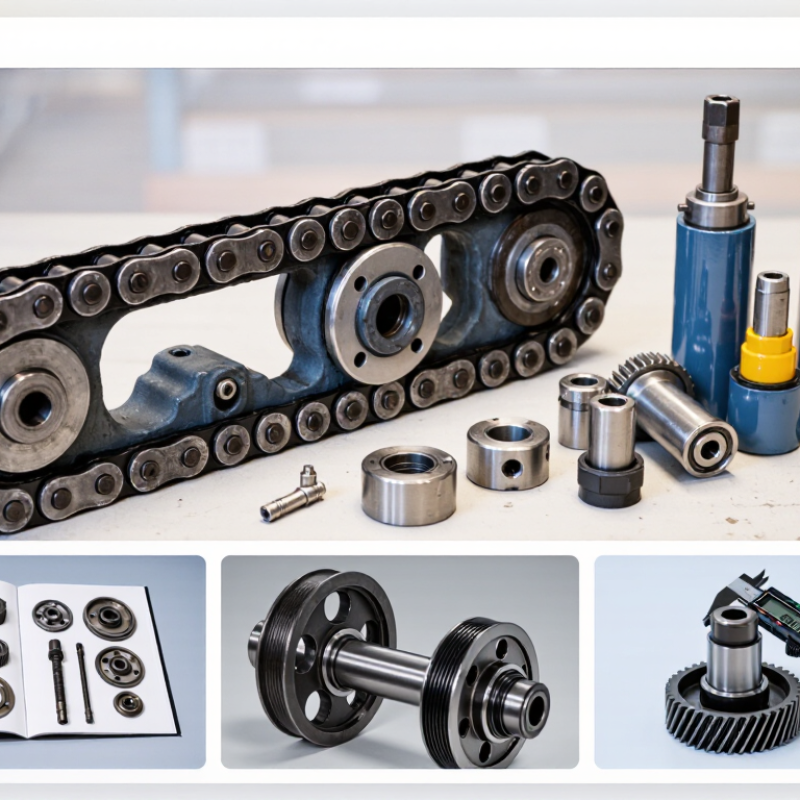
When buying used link-belt parts online, define the exact component before comparing prices. Start with the machine model, production year, serial-number range, and operating hours. Then record the part number, casting number, tooth count, bore diameter, bolt pattern, and overall dimensions. A clear photograph of the identification plate helps, but it cannot replace measurements. Small differences in hydraulic fittings or mounting holes can make an apparently identical part unusable.
Off-Highway Research’s 2024 construction equipment report estimates annual global demand above one million machines. That scale creates a large used-parts market, but it also increases identification errors. Online listings often use broad terms such as “final drive” or “arm cylinder.” Ask for seal-kit details, shaft condition, pressure-test results, and compatibility records. Request photos of machined surfaces, not only painted housings. Clean paint can hide scoring. I have seen buyers focus on price and overlook a missing spacer, which later caused installation delays.
Check the seller’s return policy, inspection method, and documentation before payment. Compare the listed dimensions with your service manual or an authorized technical database. Use a written checklist. It reduces memory-based mistakes, although it will not catch every issue. When the serial number is unreadable, pause the purchase and verify it through multiple measurements. A short video showing movement or leakage can provide useful evidence, but it is still not a complete inspection.
When buying used crawler-crane parts online, verify the seller before discussing price. Request a legal business name, physical address, service phone number, and recent sales references. A serious seller should provide clear photographs, inspection notes, and a return policy. Ask for the serial number, casting marks, dimensions, and removal date. Avoid listings with only stock images.
Compatibility requires more than matching a part description. Compare the machine model, production year, configuration, and attachment system. Confirm hydraulic pressure, bolt spacing, electrical connectors, and load rating. A small mismatch can cause downtime or unsafe operation. The U.S. Bureau of Labor Statistics projects 4% employment growth for heavy vehicle and mobile equipment service technicians from 2023 to 2033. That trend reflects continuing demand for qualified inspection and repair skills. Ask a technician to review uncertain measurements.
Industry data also supports careful documentation. The Association of Equipment Manufacturers’ 2024 construction equipment outlook describes replacement cycles and fleet maintenance as major purchasing factors. However, online listings rarely show the complete service history. That is where I remain cautious. A clean photograph proves little. Request test videos, wear measurements, and photos of contact surfaces. Compare the seller’s answers with the manufacturer’s service manual, not just a marketplace compatibility filter. Keep every message, invoice, and measurement. Mistakes happen, even with experienced buyers.
Buying used equipment parts online requires more than finding the lowest displayed price. Compare the total cost, including shipping, inspection fees, taxes, and possible core charges. A part priced 20 percent lower may become expensive after rushed freight or missing fittings.
Ask for the exact part number, operating hours, removal date, and storage conditions. Request clear photos of mounting faces, hydraulic ports, seals, teeth, and serial plates. Photos should show damage, not only clean surfaces.
I prefer sellers who answer specific questions with measurements and test records. Vague replies deserve caution.
Condition should be graded against its intended workload. An engine component with light cosmetic wear differs from one with scored surfaces or metal fatigue. Ask whether the part was tested under load, rebuilt, repaired, or sold as-is.
Warranty terms need equal attention. Check coverage length, labor exclusions, return shipping, inspection deadlines, and proof requirements. A seven-day replacement promise sounds useful, but it may exclude installation labor.
Written terms matter more than chat messages. Keep every invoice, photo, and conversation. I sometimes underestimate compatibility risks. That mistake is costly.
Tips:
How to Buy Used Link Belt Parts Online
A secure online purchase begins with accurate part identification. Record the machine model, component number, dimensions, and mounting details before contacting a seller. Clear photos should show gear teeth, hydraulic ports, bolt holes, and wear areas. Ask for close-ups, not only polished warehouse images. A reliable seller can explain the part’s service history, storage conditions, and tested functions. Request a written invoice with the exact part description, price, shipping cost, and return terms. Never rely on chat messages alone.
Tips: Check the seller’s business details and customer reviews. Compare several listings before choosing one. Use a payment method with buyer protection, and avoid sending money to an unrelated personal account. Confirm that the shipping address matches the invoice. Ask who pays return freight if the component arrives damaged or incompatible. Keep photographs, messages, inspection notes, and tracking information until the purchase is resolved.
Before payment, compare the listed condition with your repair needs. A used hydraulic valve may look clean but still have internal leakage. A replacement track component may fit physically yet fail because its specification differs. Experienced buyers still miss details when a machine is urgently needed. I have found that slowing down for one extra measurement prevents expensive mistakes. If the seller avoids technical questions, refuses inspection evidence, or changes payment instructions, pause the transaction. Secure buying is not merely finding a low price; it is verifying evidence at every step.
| Purchase Stage | Information to Verify | Recommended Action | Why It Matters |
|---|---|---|---|
| 1. Identify the Part | Machine model, serial-number range, part number, component type, and required quantity | Record the information from the machine identification plate and the service or parts manual. | Similar-looking parts may have different dimensions, mounting points, or operating specifications. |
| 2. Compare Listings | Part number, photographs, measurements, condition, included hardware, and listing date | Compare at least two listings and request additional photos of wear surfaces, connectors, threads, and mounting areas. | A lower price may reflect missing components, corrosion, excessive wear, or an incomplete assembly. |
| 3. Confirm Compatibility | Dimensions, connection type, hydraulic or electrical specifications, and machine configuration | Ask the seller to confirm compatibility in writing before payment. | Model families can contain multiple revisions and configurations that are not interchangeable. |
| 4. Assess Condition | Cracks, bends, leaks, pitting, excessive play, rust, repaired areas, and evidence of disassembly | Request clear, current photographs and ask whether the part was tested or inspected. | Used components may require rebuilding or additional service before installation. |
| 5. Review Seller Details | Verified contact information, transaction history, return terms, warranty terms, and written description | Use a marketplace or supplier that provides documented transaction records and a clear dispute process. | Transparent seller information reduces the risk of misrepresentation and makes resolution easier. |
| 6. Calculate the Total Cost | Item price, shipping, packaging, taxes, import charges, inspection, rebuilding, and installation costs | Request a written delivered-cost estimate before placing the order. | Heavy machinery parts may have substantial freight and handling charges. |
| 7. Choose a Secure Payment | Payment protection, invoice accuracy, currency, payment deadline, and refund procedure | Pay through the platform or an established payment method that provides transaction records and buyer protection where available. | Avoid irreversible payments to unverified recipients, especially when the listing details are incomplete. |
| 8. Confirm the Order | Exact part number, quantity, condition, included items, price, delivery address, and estimated dispatch date | Save the listing, messages, invoice, photographs, and payment confirmation. | Written records support inspection, returns, and payment disputes if the item differs from the agreement. |
| 9. Arrange Shipping | Weight, dimensions, packaging method, freight class, tracking number, and insurance coverage | Use protective packaging and request tracking or delivery documentation for high-value parts. | Improperly secured metal or hydraulic components can be damaged during handling and transport. |
| 10. Inspect on Delivery | Packaging damage, missing items, part number, visible defects, and condition compared with the listing | Photograph the package before opening and document any damage immediately. | Prompt evidence can help with freight claims, returns, or seller disputes. |
| 11. Install Safely | Service limits, torque values, fluid requirements, adjustment procedures, and required safety controls | Have the component inspected and installed by a qualified technician when the repair involves structural, hydraulic, electrical, or safety-critical systems. | Correct installation helps prevent equipment damage, fluid leaks, and personal injury. |
When buying used heavy-equipment parts online, delivery planning deserves as much attention as price. Confirm the seller’s dispatch date, shipping method, tracking details, and packaging procedure before payment. Ask whether the part will travel on a pallet, in a crate, or with protective wrapping. A loose hydraulic valve can suffer damage from vibration, moisture, or careless handling. Request photos of the packed part before collection. It may feel unnecessary, but it creates a useful record.
Tips: Measure the part first. Check its weight. Confirm unloading needs. Keep the delivery area clear, and arrange suitable lifting equipment before arrival. Also, ask the carrier to contact you before delivery. A large component left beside a driveway can become a costly problem.
Inspect the shipment before signing for it. Look for crushed corners, torn wrapping, fresh oil, bent fittings, and missing plugs. Photograph every side, including the shipping label and pallet condition. Compare the received part with the listing, serial details, dimensions, mounting holes, and connector positions. Do not rely only on appearance. Internal wear may not show immediately, so request service records or test information when available. If damage appears, write it on the delivery receipt and contact the seller promptly. One overlooked crack can delay repairs for weeks. I have learned that rushing this step creates avoidable arguments. A careful inspection is slower, but usually cheaper.