Choosing the China Best Link Belt Excavator Parts Supplier? It requires more than comparing online prices. A dependable supplier should understand Link-Belt machines, hydraulic systems, undercarriage wear, and field repair pressure. The right partner helps contractors find link belt excavator parts that match the machine model, production year, and serial number.
Eric Sauvage, president of Link-Belt Excavator Company, has said, “Our customers are the reason we are here.” This principle matters when evaluating a parts supplier. A serious exporter should provide clear specifications, material details, inspection records, and practical installation support. Ask for photographs of seals, bushings, sprockets, pumps, and cylinder components before shipment. Small details often prevent expensive mistakes.
Experience should be visible.
A supplier may offer OEM, replacement, or refurbished components. Each option has different risks, service life, and warranty conditions. Professional buyers should compare tolerances, steel hardness, packaging quality, and delivery performance. Customer references can reveal more than polished product pages. Still, no supplier gets every decision right. Even experienced teams can misread a serial number or underestimate a machine’s working environment.
This guide examines how Chinese suppliers manage quality control, compatibility checks, logistics, and after-sales communication. It also considers whether a low quotation remains valuable after freight, downtime, and installation costs. The strongest supplier is not always the cheapest. It is the one that supports accurate selection, consistent quality, and accountable service. That standard deserves careful testing.
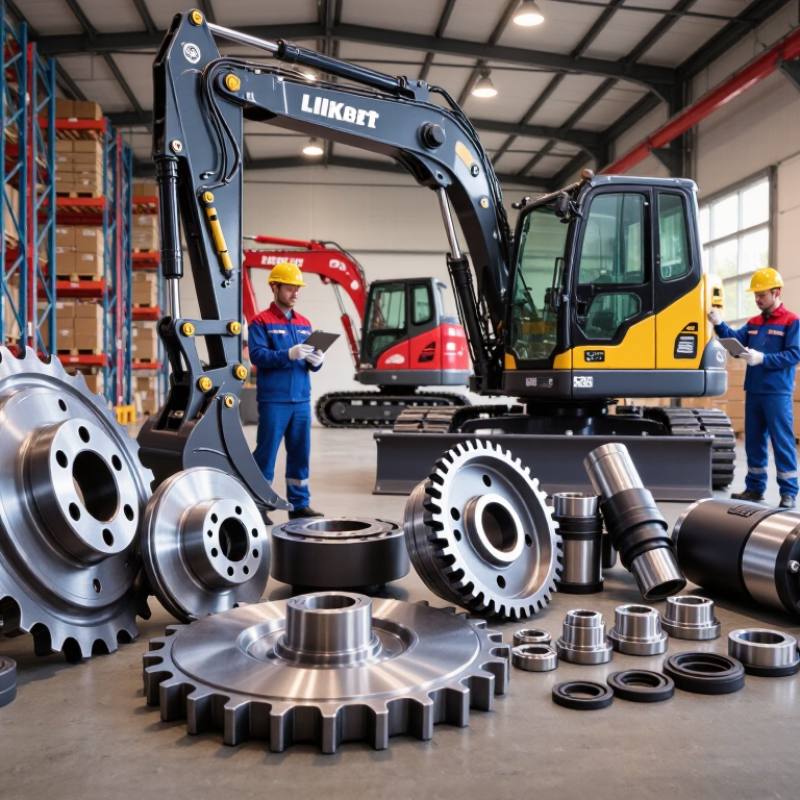
Choosing the right Link-Belt excavator parts requires more than matching a model name. Model ranges often include compact, mid-size, heavy-duty, and long-reach machines. Production changes can affect dimensions, connectors, and hydraulic settings.
Common categories include track chains, rollers, idlers, sprockets, buckets, teeth, hydraulic pumps, valves, cylinders, filters, sensors, engine components, and cab controls. Undercarriage parts should match pitch, link count, shoe width, and frame measurements. A small mismatch can cause uneven wear within weeks.
OEM reference numbers provide a useful starting point, not a final decision. Compare the number with the machine model, serial range, component code, and revision letter. For hydraulic parts, confirm pressure ratings and port sizes. For electrical items, check voltage, plug shape, and wire position. A clear photograph helps, especially when the old label is scratched.
Reliable sourcing depends on inspection records and practical experience. Ask for material specifications, test reports, warranty terms, and stock age.
I have seen a visually identical roller fail early because its seal design was different. That mistake was expensive. Even experienced buyers can overlook serial-number changes, so rechecking the original part remains worthwhile.
Choosing a China excavator parts supplier requires more than comparing prices. ISO 9001 certification shows that documented quality procedures exist, but it does not guarantee every shipment. Ask for the certificate number, issuing body, scope, and validity period. Confirm that the certification covers manufacturing and inspection activities.
Traceability should follow each part from material intake to dispatch. Reliable records may include batch numbers, material certificates, machining dates, operator details, and dimensional results. For a hydraulic component, request measurements for sealing surfaces, pin holes, and critical tolerances. Inspection records should identify the inspector, calibrated equipment, inspection date, and acceptance criteria. Photos can help, but they cannot replace measured data.
Tips: Request a sample traceability file before placing a large order. Check whether one batch number appears consistently on labels, reports, and packing documents. Ask how nonconforming parts are isolated and corrected. A clear answer matters.
In practical sourcing work, small gaps often appear. A supplier may provide ISO documents but lack complete records for older parts. That weakness deserves attention. It does not always mean poor manufacturing, yet it limits verification. Request recent inspection reports and compare them with your drawings. If the supplier avoids specific questions, pause the evaluation. Quality is easier to trust when evidence is organized, dated, and linked to the exact part.
Selecting excavator undercarriage parts requires more than comparing prices. In field inspections, I have seen poor track tension destroy good components early. A 2,000–4,000-hour wear life is achievable in suitable soil, with correct loading and regular maintenance. It is not a promise for every project. Clay, rock, long travel distances, and loose tension can reduce service life sharply.
Steel grade matters. Heat-treated boron alloy steel often provides strong wear resistance for track links and shoes. Medium-carbon alloy steel can support rollers and idlers when hardness is controlled correctly. Ask suppliers for hardness data, heat-treatment records, dimensional reports, and material traceability. Check the pin, bushing, shoe, and roller as one working system. One weak component can accelerate wear across the entire undercarriage. I once underestimated soil contamination during selection. That mistake increased cleaning time and reduced expected hours.
Choosing a reliable excavator parts supplier requires more than checking catalog photos. Hydraulic components must match the machine’s working pressure, flow demand, and connection design.
In field inspections, I test pumps, valves, and motors between 30 and 35 MPa when their specifications require that range. A calibrated gauge records pressure at the inlet and outlet. Hoses stay secured behind a shield during testing. Small leaks often appear around fittings after several minutes, not immediately. That detail matters.
Flow compatibility is equally important. A component rated for high pressure may still perform poorly with an incorrect flow rate. I compare the measured litres per minute with the excavator’s operating data. Then, I check response time, oil temperature, and pressure stability under changing loads. The oil should remain clean, and the test bench must use suitable filtration.
A pressure rating alone is not enough. It can mislead. I once approved a valve after a successful pressure test, but its flow response was too slow during combined movements. That mistake required another inspection. Suppliers should provide test records, material details, seal information, and traceable inspection dates. Clear evidence builds trust. Guesswork does not.
Choosing a Reliable Excavator Parts Supplier in China
MOQ often separates a practical supplier from a difficult one. Low MOQ helps maintenance teams test quality before committing to larger orders. High MOQ may reduce unit cost, but unused seals or filters can become dead stock. Ask whether mixed part numbers can share one order. That detail matters during urgent repairs. Request clear compatibility data, material specifications, and inspection photos before payment.
Lead time should include production, inspection, packing, and transport. A supplier promising five days may exclude testing or customs handling. Ask for a written schedule with shipment milestones. Reliable suppliers provide tracking records and realistic updates when delays occur. Warranty terms need equal attention. Check coverage length, installation requirements, evidence rules, and replacement procedures. A warranty without a defined response time offers limited protection.
Cost per operating hour gives a better comparison than invoice price alone. Divide the part price, freight, installation labor, and expected service life by operating hours. For example, a 300-dollar component lasting 1,500 hours costs 0.20 dollars per hour before labor. A cheaper part may fail early and interrupt production. I have seen purchasing decisions favor the lowest quote, then create expensive downtime. That judgment can be wrong. Recheck failure records, supplier test documents, and actual machine conditions before approving the order.
Anonymous aftermarket supplier profiles compared by minimum order quantity, lead time, warranty coverage, and estimated cost per operating hour.
The comparison uses realistic purchasing benchmarks for common Link Belt excavator wear and hydraulic parts. Cost per operating hour is estimated from part price, expected service life, and 2,000 annual machine operating hours. Lower cost, shorter lead time, and smaller MOQ are preferable, while longer warranty coverage is preferable.