| Regulatory framework | EU Stage V engine requirements are established under Regulation (EU) 2016/1628 for covered non-road mobile machinery engines, including relevant generator-engine categories. | Tier 4 Final requirements for covered non-road compression-ignition engines are set out in US EPA regulations, including 40 CFR Part 1039. | Confirm the rules that apply at the installation location, including any national, state, or local requirements. |
| Application and classification | Coverage depends on the engine category, rated power, intended use, and applicable regulatory provisions. | Coverage depends on engine category, rated power, model year, and whether the engine is classified as non-road or stationary. | Ask the supplier to identify the engine’s regulatory category and intended application in writing. Stationary engines may be subject to requirements other than Tier 4. |
| How compliance is documented | Check the engine’s EU type-approval information, identification label, and supporting compliance documents for the exact engine model. | Check the EPA certificate of conformity and engine label for the exact engine family and model year. | Match the documents and labels to the engine installed in the generator set, not just to a similar model or product range. |
| Emission limits | Stage V limits vary by engine category and power range and include regulated pollutants such as nitrogen oxides (NOx) and particulate matter (PM); particle-number requirements apply to specified categories. | Tier 4 Final limits vary by engine category and power range and regulate pollutants including NOx and PM. | Do not assume the standards are interchangeable or compare a single limit without checking the engine category, test cycle, and certified configuration. |
| Exhaust aftertreatment | Depending on engine category and design, compliance may involve systems such as a diesel particulate filter (DPF) or selective catalytic reduction (SCR). | Depending on engine category and design, compliance may involve a DPF, SCR, or other certified emissions-control technology. | Confirm which systems are fitted, where they are located, and what inspection, cleaning, or replacement intervals apply. |
| Diesel exhaust fluid | Some SCR-equipped configurations require diesel exhaust fluid (DEF, also called AdBlue in Europe); not every engine uses SCR. | Some SCR-equipped configurations require DEF; not every engine uses SCR. | If DEF is required, check tank capacity, refill access, storage arrangements, and the operating instructions for the selected engine. |
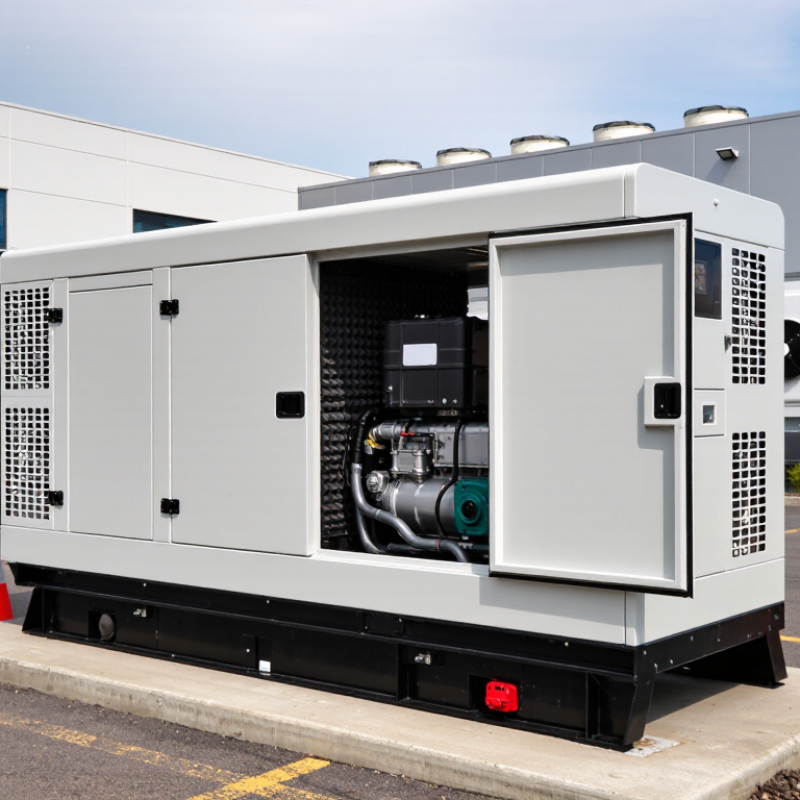
| Silent enclosure and noise rating | Stage V is an emissions standard; it does not by itself specify the generator set’s sound level. | Tier 4 Final is an emissions standard; it does not by itself specify the generator set’s sound level. | Compare the stated sound pressure level in dB(A), measurement distance, operating load, and test conditions. “Silent” is not a universal noise rating. |
| Cooling and ventilation | An acoustic enclosure must provide sufficient airflow and heat rejection while maintaining the required emissions-control configuration. | An acoustic enclosure must provide sufficient airflow and heat rejection while maintaining the required emissions-control configuration. | Check rated output at the expected ambient temperature and altitude, plus ventilation clearances and exhaust-routing requirements. |
| Maintenance and operating costs | Maintenance needs depend on the engine and aftertreatment system; follow the engine-specific service schedule. | Maintenance needs depend on the engine and aftertreatment system; follow the engine-specific service schedule. | Request service intervals and requirements for filters, aftertreatment components, DEF where applicable, and emissions-system fault monitoring. |
| Best-fit selection | Choose an engine with documentation confirming Stage V compliance for the intended EU application and installation. | Choose an engine with documentation confirming Tier 4 Final compliance where that standard applies to the intended US application. | First confirm local regulatory eligibility, then compare usable power, duty cycle, noise data, fuel consumption, service access, and total operating cost. |