Why Choose Reliable Forestry Equipment Sales Worldwide?
Choosing reliable forestry equipment sales is not simply about finding the lowest advertised price. It is about protecting productivity, worker safety, and long-term operating costs. A dependable supplier should understand harvesting conditions, terrain, timber species, climate, and transport limits. A machine working in wet Nordic soil may fail in steep tropical terrain. The details matter.
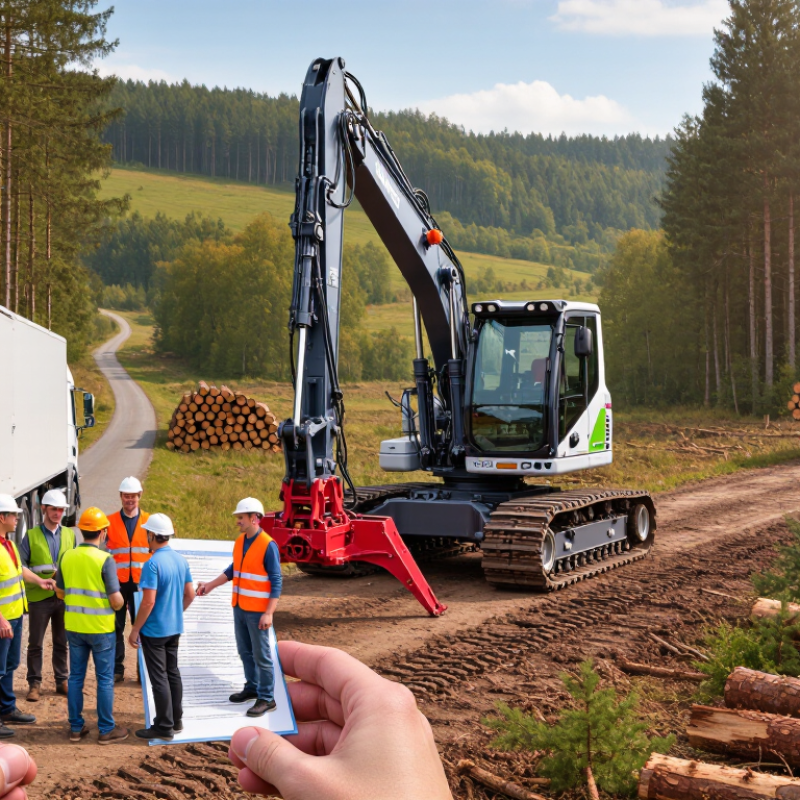
Ponsse founder Einari Vidgrén often emphasized, “A machine must work for the man, not the other way around.” This principle still fits modern forestry equipment sales. Buyers need more than a polished catalogue. They need accurate specifications, practical demonstrations, transparent warranties, and accessible replacement parts. A strong dealer can explain fuel consumption, hydraulic performance, operator comfort, service intervals, and expected downtime. That advice becomes valuable when a harvester is standing beside a muddy forest road.
Reliability is tested after the contract is signed.
Worldwide support also requires cultural and technical awareness. Local technicians should understand regional regulations and maintenance habits. Remote diagnostics can shorten delays, but technology does not replace skilled people. Sometimes, a basic spare part arrives late. Sometimes, the recommended machine is simply too large for the operation. Honest advice must admit these limits.
For this reason, reliable forestry equipment sales should be judged through evidence, not promises. Examine customer feedback, service records, training options, and lifecycle costs. Ask difficult questions. The cheapest purchase can become expensive when repairs, transport, and lost harvesting hours accumulate. Careful suppliers welcome scrutiny. That is often a better sign than confident advertising.
FAO’s 4.06 Billion Hectares: Why Global Equipment Access Matters
FAO estimates that forests cover about 4.06 billion hectares worldwide. That figure represents more than trees on a map. It includes steep slopes, wet ground, remote roads, and communities depending on productive forests. Reliable equipment access matters because local crews cannot manage these conditions with unsuitable machines. A well-matched harvester, loader, or transport unit can reduce delays and protect workers during long shifts.
In remote regions, dependable forestry equipment sales require more than shipping a machine overseas. Buyers need clear specifications, service records, operator training, and realistic delivery schedules. Spare parts should reach distant work sites without creating months of downtime. Sales teams should also understand soil conditions, rainfall, terrain, and local maintenance skills. This is practical expertise, not decoration.
Field experience often reveals problems that brochures miss. A machine may perform well on dry ground but struggle after heavy rain. I have seen small maintenance details decide whether a project continues. That lesson deserves attention. Global equipment access should include technical support, transparent warranties, and responsible sourcing. The uncomfortable truth is that the cheapest option can become expensive when parts are unavailable. Price alone misleads. Procurement teams should compare fuel use, repair access, operator safety, and expected service life. Even careful decisions can be imperfect, especially where roads, ports, and workshops remain limited.
Why Choose Reliable Forestry Equipment Sales Worldwide?
FAO estimates that global forests covered approximately 4.06 billion hectares in 2020. Regional differences in forest area highlight why dependable access to safe, efficient forestry equipment is important across diverse operating environments.
Forest area by FAO region, 2020. Values are shown in million hectares. Source: FAO, Global Forest Resources Assessment 2020.
FAO’s 2022 Timber Output Exceeded 4 Billion Cubic Metres
Why Choose Reliable Forestry Equipment Sales Worldwide?
FAO reported that global timber output exceeded 4 billion cubic metres in 2022. That figure shows the scale of modern forestry and its demand for dependable equipment. Harvesting, loading, and processing must continue across changing terrain and weather. A reliable supplier helps buyers match machines with local forest conditions, production targets, and operator skills.
Equipment quality involves more than a strong engine. Buyers should check fuel efficiency, safety systems, maintenance access, spare-part availability, and technical support. Clear specifications also matter. A machine designed for steep hills may perform poorly on soft ground. In practical purchasing, small details often decide long-term costs. Still, no sales process is perfect. Even well-tested equipment can need adjustments after arriving in a new environment.
Tips: Request service records, operating videos, warranty terms, and verified performance data. Ask whether replacement parts can reach your region quickly. Compare total ownership costs, not only the purchase price. Inspect controls, protective structures, tires, and hydraulic lines before delivery. A low price may look attractive, but downtime can quietly consume the savings. Good suppliers explain limitations honestly and provide documentation that supports safe, informed decisions. That level of transparency builds trust between international sellers and forestry professionals.
Why Choose Reliable Forestry Equipment Sales Worldwide? - FAO’s 2022 Timber Output Exceeded 4 Billion Cubic Metres
| Indicator |
2022 Global Output |
Unit |
Equipment Planning Relevance |
Data Basis |
| Total roundwood production |
About 4.0 billion |
m³ |
Indicates the worldwide scale of harvesting, forwarding, loading, and timber-processing demand. |
FAO global forestry statistics |
| Industrial roundwood production |
About 2.0 billion |
m³ |
Supports demand for reliable equipment used in sawmilling, pulping, panel production, and log transport. |
FAO global forestry statistics |
| Woodfuel production |
About 2.0 billion |
m³ |
Reflects the need for durable chipping, splitting, handling, and biomass preparation equipment. |
FAO global forestry statistics |
| Sawnwood production |
About 0.54 billion |
m³ |
Highlights the importance of accurate sawing, sorting, edging, drying, and material-handling systems. |
FAO global forestry statistics |
| Wood-based panel production |
About 0.38 billion |
m³ |
Creates demand for dependable fiber preparation, drying, pressing, trimming, and quality-control equipment. |
FAO global forestry statistics |
| Global operating environment |
Worldwide |
Multiple markets |
Reliable international supply requires compatible specifications, spare-parts access, technical support, and compliance with local regulations. |
Market-service consideration |
Note: Global output figures are rounded values reported for 2022. Source: Food and Agriculture Organization of the United Nations, Global Forest Products Facts and Figures 2022.
Reliability and Uptime: Measuring Lifecycle Value Beyond Purchase Price
Reliable forestry equipment sales should be judged by working hours, not only invoice value. In the field, a machine may face mud, steep terrain, freezing mornings, and long shifts. These conditions expose weak components quickly. Experienced buyers inspect service records, frame joints, hydraulic lines, and access to replacement parts. A clean sales process should explain expected maintenance, operating limits, and support arrangements before delivery.
Uptime is a practical measure of lifecycle value. Track scheduled hours, unplanned stoppages, repair time, fuel use, and parts availability. For example, a harvester losing two hours daily can reduce output more than a higher purchase price.
Fast diagnosis matters. So does a technician who understands local weather and terrain. Reliable equipment should allow simple inspections, clear fault indicators, and safe access to filters and lubrication points. Small design details save real time beside a forest road.
No machine stays perfect. That is the uncomfortable part. Buyers sometimes focus too heavily on specifications and overlook operator training or maintenance discipline. I have seen capable equipment underperform because inspections were rushed after muddy shifts. A more honest evaluation includes downtime history, repair response, resale expectations, and the cost of keeping skilled operators productive. Purchase price matters, but dependable performance determines whether the investment keeps earning through changing seasons.
Safety Standards: Aligning Forestry Machinery with ILO Risk Controls
Reliable forestry equipment sales worldwide should begin with safety evidence, not attractive specifications. Forestry remains physically demanding and highly exposed to falling trees, moving parts, noise, and unstable ground. The ILO’s 2023 global estimates recorded 2.93 million work-related deaths annually, showing why risk control cannot be treated as paperwork. The FAO’s State of the World’s Forests 2022 reported approximately 33 million forest-sector jobs worldwide. That scale makes consistent machinery safeguards essential.
Equipment should reflect the ILO hierarchy of controls. Suppliers need to demonstrate guarded cutting areas, emergency stops, stable access points, clear warning labels, and service records. Operators also need practical training, planned maintenance, and suitable personal protective equipment. A machine that performs well but lacks visible isolation points is not reliable. Not really. During a site inspection, small details matter: a damaged handrail, an unclear control symbol, or oil beneath a hydraulic line can change the risk assessment. The ILO Code of Practice on Safety and Health in Forestry Work stresses competent supervision, communication, and machine maintenance. Those controls must survive wet weather, steep slopes, and long shifts. No checklist is perfect. Buyers should still question test conditions, replacement-part availability, and local training support before purchasing. Safety claims require documentation, not confident language.
Parts, Service, and Compliance: Evaluating Worldwide Equipment Suppliers
Reliable forestry equipment sales worldwide depend on more than machine availability. Parts access, service quality, and compliance often determine whether equipment stays productive. A supplier should provide clear parts diagrams, accurate stock information, and realistic delivery times. A missing hydraulic seal can stop a harvesting operation for days. That delay costs more than the part itself.
Service support needs practical depth. Ask whether technicians understand local working conditions, fuel quality, weather, and terrain. Remote troubleshooting can help, but it cannot replace trained field support. Maintenance records, inspection schedules, and operator guidance should be easy to follow. A supplier may promise fast assistance, yet response times should be measured in writing. This is where many evaluations become too optimistic.
Tips:
Check parts availability before purchase. Request service contacts in your region. Review warranty exclusions carefully. Confirm training options and emergency procedures. Ask for compliance documents before shipment, including safety, emissions, and import records required by the destination country. Requirements can differ widely. A machine approved in one market may need additional assessment elsewhere. Serial-number tracking also improves accountability. Still, paperwork alone proves little. Review its accuracy, update date, and connection to the actual machine. Small details matter.