China Top Forestry Equipment Sales for Global Buyers
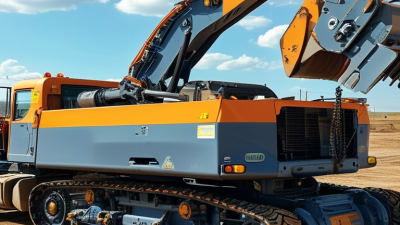
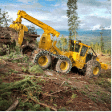
China has become a major source of forestry machinery for global buyers. Its manufacturers now supply skidders, forwarders, wood chippers, harvesters, loaders, and sawmill equipment. These machines support logging, biomass production, land management, and forest restoration projects.
The market is broad. Quality is not uniform. Some factories provide advanced automation, reliable hydraulics, and detailed inspection records. Others still need stronger testing and better after-sales support. Buyers should examine engine standards, steel quality, control systems, spare-parts access, and operator safety before ordering. A low purchase price can become expensive when a hydraulic pump fails overseas.
Forestry equipment sales should therefore focus on more than machinery volume. They should reflect field performance, service capability, and responsible forest management. Dr. David Lindenmayer, a respected forest ecologist, has said, “The best way to manage forests is to understand them.” That principle also matters when selecting equipment. A machine must match the terrain, tree size, climate, labor skills, and local regulations.
China’s strongest suppliers increasingly offer customized configurations. They may adjust tire patterns for wet ground, cabin protection for steep slopes, or chipper capacity for regional wood waste. These practical details matter.
Still, buyers should remain cautious. Factory photographs are not field evidence. A successful demonstration does not guarantee long-term reliability. Independent inspections, verified references, warranty terms, and clear technical documents reduce uncertainty. The best forestry equipment sales partnerships combine competitive pricing with transparent communication, measurable performance, and continuing support. That balance is not always easy. It is the part many purchasing plans underestimate.
China’s Forestry Equipment Industry: Scope and Main Product Categories
China’s forestry equipment industry covers a broad supply chain, from forest planting and maintenance to harvesting, transport, and wood processing. Its manufacturing base serves small contractors, large forestry operators, municipal projects, and international distributors.
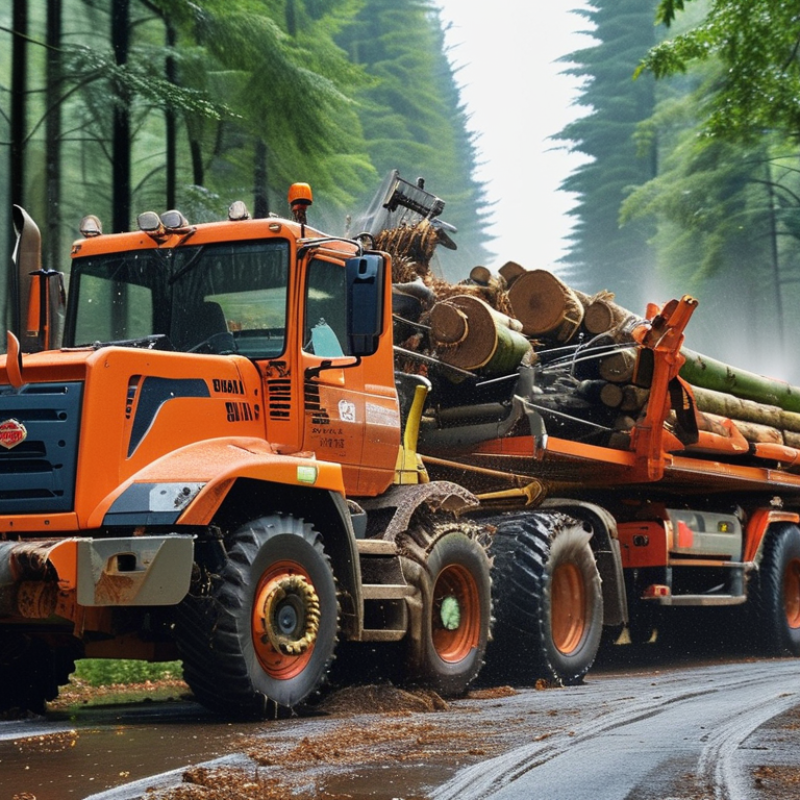
Main product categories include brush cutters, chainsaws, chippers, stump grinders, log splitters, skidders, forwarders, and compact loaders. Wood-processing equipment often includes sawmill systems, debarkers, conveyors, and biomass shredders. Buyers should match machine capacity with local tree species, terrain, climate, and daily workload. Details matter.
China also supplies replacement parts, hydraulic components, cutting tools, and maintenance equipment. This wider scope can reduce procurement delays when suppliers provide compatible components and technical documents. However, specifications are not always presented consistently. Careful review is necessary.
Experienced buyers usually request test records, material details, safety documents, and clear warranty terms. Factory inspections or independent pre-shipment checks can reveal weak welds, poor finishing, or unsuitable electrical systems. Small issues become expensive in remote forests. Field feedback helps.
Export planning should consider emissions rules, noise limits, operator training, packaging, and after-sales support in the destination market. A lower purchase price may not reduce total costs if parts arrive slowly or manuals lack practical detail. I have found that realistic performance data is more useful than impressive catalog numbers. Even reliable suppliers can improve their documentation.
Key Factors Driving Global Demand for Chinese Forestry Equipment
China Top Forestry Equipment Sales for Global Buyers
Key Factors Driving Global Demand for Chinese Forestry Equipment
Global buyers increasingly consider Chinese forestry equipment because it combines competitive pricing with broad production capacity. In field evaluations, buyers often compare fuel use, cutting performance, transport width, and maintenance access. Price matters, but downtime matters more. A machine that stops beside a wet logging road can quickly erase its initial savings.
Manufacturing flexibility is another strong factor. Chinese producers can adapt equipment for steep terrain, small timber, plantation work, or mixed forest conditions. Buyers may request different engine specifications, attachment sizes, cabin protection, and hydraulic settings. Many machines now include improved safety guards, remote monitoring, and lower-emission power systems. These details support operators working long shifts in rain, dust, and uneven ground.
Supply reliability also influences purchasing decisions. Export experience, spare-parts availability, clear manuals, and responsive technical support build buyer confidence. Independent inspections and recognized safety certifications remain important before shipment. Experienced importers usually test sample machines instead of trusting brochures alone. Regional service partners can reduce repair delays, especially where workshops are distant.
However, the cheapest offer is not always the best decision. Some buyers underestimate operator training, parts storage, or local climate requirements. That mistake becomes expensive. Product quality can also vary between production lines and specifications, so verification is essential. A careful purchasing process should review warranty terms, service records, noise levels, and total ownership costs. Chinese forestry equipment attracts global demand, yet successful adoption depends on matching the machine to real working conditions.
Leading Types of Forestry Equipment Available from China
Leading Types of Forestry Equipment Available from China
China supplies a broad range of forestry equipment for plantation, small woodland, and commercial processing work. Common options include
chainsaws, brush cutters, winches, wood chippers, log splitters, mobile sawmills, skidders, forwarders, and compact harvesters.
The FAO Global Forest Resources Assessment 2020 recorded about
4.06 billion hectares of forest worldwide.
That scale creates different equipment needs, from narrow mountain paths to flat plantation rows.
For buyers, matching machine design to field conditions matters more than headline horsepower. A tracked chipper can work beside a rough roadside, while a compact forwarder reduces manual log handling on managed sites. Mobile sawmills suit smaller operators who need boards near the harvest area.
FAOSTAT forestry data reported global roundwood production at roughly
3.9 billion cubic metres in 2022,
showing the continuing demand for cutting, extraction, and processing equipment. But figures alone cannot predict performance.
Check engine emissions documentation, spare-part access, hydraulic quality, operator protection, and test records before ordering. Ask for videos from working sites, not only factory demonstrations.
Small details matter.
A poorly sealed electrical connector can fail after one wet season.
Chinese suppliers offer competitive configurations, yet quality can vary between production lines. This is where buyers must remain skeptical, compare specifications, and arrange independent inspection when practical. Trade data and market reports provide useful direction, but they cannot replace a field trial.
How International Buyers Evaluate Chinese Forestry Equipment Suppliers
China Top Forestry Equipment Sales for Global Buyers
International buyers assess Chinese forestry equipment suppliers beyond the purchase price. The FAO’s Global Forest Resources Assessment 2020 records 4.06 billion hectares of global forest area. That scale demands dependable harvesting, processing, and transport equipment. Buyers often inspect steel thickness, hydraulic response, fuel use, and maintenance access. They also request factory test videos and serial-numbered inspection records. A supplier should provide clear load ratings, operating limits, and replacement-part drawings. Vague specifications create expensive doubts.
Supplier reliability matters after delivery. The World Bank’s Logistics Performance Index 2023 highlights major differences in international shipping efficiency. Buyers should therefore confirm export packaging, port procedures, and spare-parts availability before signing. ISO 9001 certification can support quality controls, but it cannot replace machine testing. Ask for references from similar climates and terrain. Check performance under dust, steep slopes, or low temperatures. A low quote may look attractive. It may also hide weak components or delayed support. In practice, even experienced buyers sometimes overvalue price and undervalue downtime.
Tips: Compare total ownership cost, not only the invoice. Request a parts list, warranty process, and response-time commitment. Test one unit before placing a large order. Review welding quality, hose protection, operator visibility, and emergency controls. Independent inspection is worthwhile. It may feel slow, but one overlooked defect can stop a remote operation for weeks. Source: FAO Global Forest Resources Assessment 2020; World Bank Logistics Performance Index 2023.
China Top Forestry Equipment Sales for Global Buyers - How International Buyers Evaluate Chinese Forestry Equipment Suppliers
| Equipment Category |
Common Global Applications |
Typical Power Range |
Typical Production Capacity |
Indicative Export Price Range (USD) |
Buyer Evaluation Score
(out of 5) |
Main Supplier Evaluation Factors |
| Portable Sawmills |
Small sawmills, rural forestry operations, mobile timber processing |
15–45 kW |
1–5 m³/hour |
$3,000–$25,000 |
4.4 |
Cutting accuracy, frame strength, spare-parts availability, blade compatibility, assembly instructions |
| Wood Chippers |
Logging residues, municipal green waste, biomass preparation |
30–180 kW |
5–30 m³/hour |
$6,000–$45,000 |
4.2 |
Rotor balance, feed opening size, safety systems, wear-part cost, fuel efficiency |
| Log Splitters |
Firewood processing, farm forestry, residential and commercial wood yards |
5.5–22 kW |
3–12 tonnes/hour |
$1,200–$9,000 |
4.3 |
Splitting force, cycle time, hydraulic safety, log-diameter range, ease of maintenance |
| Forestry Winches |
Log extraction, selective harvesting, steep-terrain operations |
18–90 kW tractor compatible |
3–8 tonnes pulling force |
$2,000–$14,000 |
4.1 |
Cable quality, braking performance, anchoring design, tractor compatibility, operator protection |
| Grapple Loaders |
Log loading, timber-yard handling, roadside collection |
55–180 kW |
8–25 tonnes/hour |
$28,000–$95,000 |
3.9 |
Hydraulic response, lifting stability, boom reach, attachment durability, operator visibility |
| Skidders |
Full-tree harvesting and log extraction on managed forest roads |
90–220 kW |
10–35 tonnes/load |
$85,000–$260,000 |
3.8 |
Traction, ground clearance, transmission reliability, rollover protection, service support |
| Forwarders |
Cut-to-length log transport with reduced soil disturbance |
100–220 kW |
8–20 tonnes/load |
$120,000–$360,000 |
3.7 |
Payload-to-weight ratio, crane cycle time, fuel consumption, tire or track performance, telemetry |
| Biomass Grinders |
Stump processing, forestry residue recycling, biomass fuel production |
150–500 kW |
20–80 tonnes/hour |
$90,000–$420,000 |
3.9 |
Throughput consistency, wear resistance, particle-size control, dust suppression, operating cost |
Buyer Evaluation Framework: Scores reflect a practical five-point assessment based on price competitiveness, product specifications, build quality, safety compliance, delivery reliability, documentation, warranty terms, spare-parts support, and after-sales service. Price ranges are indicative export-market ranges and vary by configuration, power source, capacity, certification, shipping terms, and order volume.
Export, Compliance, and After-Sales Considerations for Global Buyers
China’s forestry equipment offers cover skidders, chippers, harvesters, loaders, and sawmill systems. Global buyers should judge more than purchase price. FAO’s Global Forest Resources Assessment 2020 recorded 4.06 billion hectares of forest worldwide. Demand therefore varies sharply between tropical, boreal, and plantation operations. A machine suited to flat eucalyptus land may struggle on steep, wet terrain.
Export compliance requires evidence, not promises. Buyers should request serial-number records, technical manuals, conformity documents, and engine-emission certificates before shipment. Requirements differ across the European Union, North America, and other markets. UNECE/FAO’s Forest Products Annual Market Review 2023–2024 shows continuing volatility in forest-product trade, making delivery planning important. Confirm HS codes, import duties, electrical standards, and local registration rules with customs specialists. Small details matter.
After-sales support can decide whether a sale succeeds. Ask for a parts list, response times, remote-diagnostic access, and technician training. A practical contract should define warranty coverage, excluded wear parts, and repair responsibilities. FAO data indicates global roundwood production reached roughly four billion cubic metres in 2022, so equipment downtime can affect busy supply chains. Buyers should test spare-part delivery with one sample order. It may expose weak logistics. Some sellers provide impressive brochures but limited field support. That gap deserves honest checking before payment.