What Are the Top Used Forestry Equipment Types in 2026?

The forestry market is entering 2026 with stronger pressure to control costs, improve productivity, and extend machine life. Forests cover about 4.06 billion hectares worldwide, according to the FAO Global Forest Resources Assessment 2020. That scale supports continuing demand for harvesters, forwarders, skidders, loaders, chippers, and forestry tractors.

Used forestry equipment is becoming a practical choice for contractors facing high new-machine prices. However, the cheapest machine is rarely the safest investment. Engine hours, hydraulic pressure, undercarriage wear, frame cracks, and service records can change its real value quickly. EquipmentWatch’s Used Equipment Market Report shows why buyers should compare age, utilization, resale value, and repair risk instead of relying on advertised prices. Forestry-specific reports remain limited. That gap deserves attention.

As used-equipment specialist Richard Ryan explains, “A low purchase price never replaces a verified maintenance history.” His point is simple. A clean cab means little when a harvester’s boom pins are loose or its head has uneven feed-roller wear.

The 2026 discussion should examine real working conditions, not just equipment categories. A forwarder operating on wet peat faces different risks from one working on frozen ground. A used chipper may look productive, yet hidden rotor damage can stop a small contractor’s entire operation. Auction platforms, dealer inspections, and manufacturer service data offer useful evidence, but none is perfect. Buyers still need judgment. This guide compares the top used forestry equipment types, their practical strengths, common weaknesses, and the warning signs worth checking before purchase.
What Are the Top Used Forestry Equipment Types in 2026?

What Defines Used Forestry Equipment in 2026?

Used forestry equipment in 2026 means more than an older machine with a lower price. It refers to equipment previously operated in harvesting, forwarding, loading, processing, or site preparation. Common examples include harvesters, forwarders, skidders, chippers, loaders, and tracked excavators. Age matters, but working history matters more.

A reliable definition includes measurable condition. Buyers should examine engine hours, hydraulic performance, undercarriage wear, frame cracks, attachment damage, and service records. Modern machines may also provide digital operating data, maintenance alerts, and fuel-use histories. These details help separate a carefully maintained unit from equipment that only looks clean after repainting. A machine with 9,000 hours is not automatically a poor choice. Poor records are the bigger warning.

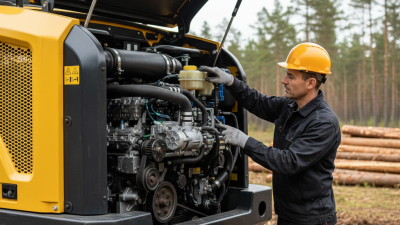
In practical inspections, test the machine under realistic load. Listen for uneven hydraulic sounds. Check cold starts, brake response, control accuracy, and fluid leaks. Inspect saw heads, grapples, tracks, tires, and protective structures closely. Independent technicians can identify wear that photos hide. Still, no inspection predicts every breakdown. That is the uncomfortable part. Buyers should allow funds for hoses, sensors, filters, and unexpected downtime. Used equipment in 2026 is best defined by transparent history, verifiable condition, available parts support, and a realistic understanding of remaining service life. Reliability is never perfect.

Which Used Machines Handle Forest Access and Site Preparation?

What Are the Top Used Forestry Equipment Types in 2026?

Forest access and site preparation demand machines that can work slowly, precisely, and safely on uneven ground. Used crawler dozers remain practical for opening narrow access routes, pushing slash, and shaping shallow grades. Excavators add value around drainage crossings, stumps, and rocky soil. Motor graders are useful when roads need a smoother running surface. Compact track loaders with forestry attachments can clear light brush, but they may struggle in heavy residue.

The scale is significant. The FAO Global Forest Resources Assessment 2020 records about 4.06 billion hectares of forest worldwide. It also reports roughly 10 million hectares of annual forest loss between 2015 and 2020. These figures support continued demand for access and preparation equipment, although regional work methods differ. A used machine must match the terrain, not merely the advertised horsepower.

Inspection matters more than polished paint. Check undercarriage wear, hydraulic leaks, swing movement, cooling systems, and frame repairs. For dozers, measure track-chain wear and inspect blade pins. For excavators, test every hydraulic function under load. A machine with 8,000 hours may outperform a neglected unit with fewer hours. That assumption can still be wrong. Maintenance records may be incomplete, and hidden fatigue often appears after purchase. The FAO data explains forest pressure, but it does not guarantee equipment demand in every local market. Conditions, transport costs, and operator skill remain decisive.

How Do Used Harvesting Machines Support Tree Removal?

Used harvesting machines can make tree removal more controlled, especially on large sites with uneven ground. A used feller buncher cuts selected stems, grips them, and places them in manageable groups. That reduces manual exposure near falling timber. It also keeps removal patterns more consistent. But precision depends on operator judgment. Poor planning still creates hazards.

An experienced crew may pair a feller buncher with a skidder or forwarder. The skidder moves logs across short, rough routes, while the forwarder carries them with less ground contact. This separation helps keep access lanes open and reduces unnecessary soil disturbance. Before purchase, technicians should inspect hydraulic leaks, boom joints, brake response, tracks, and engine records. Service history matters more than clean paint. Small faults can become expensive under heavy loads.

After cutting, a used grapple loader can sort timber, while a mobile chipper processes smaller branches. These machines help clear roadsides, construction areas, and storm-damaged plots more efficiently. I have found that machine size must match the worksite, not personal preference. An oversized unit may compact soil and struggle between standing trees. A smaller unit may work carefully but take longer. Used equipment is never a perfect shortcut. Operators still need clear felling plans, stable ground checks, and constant communication. Even reliable machines cannot correct a rushed decision.

What Are the Top Used Forestry Equipment Types in 2026? — How Do Used Harvesting Machines Support Tree Removal?
Equipment type Main function How it supports tree removal Typical operation Key checks when buying used
Feller-buncher Fells standing trees and gathers them into bunches. Prepares trees for extraction by cutting and arranging stems for a skidder or forwarder. Wheeled and tracked configurations suit different ground conditions. Clear-cutting and thinning operations where trees can be grouped for later transport. Inspect the felling head, saw or shear, hydraulic hoses, boom, joints, undercarriage or tires, and evidence of structural repairs.
Cut-to-length harvester Fells trees and processes stems by removing branches and cutting logs to specified lengths. Combines felling and processing at the stump, producing logs that can be moved by a forwarder. It can also help sort logs by length or product specification. Cut-to-length harvesting, especially where logs are transported on a forwarder rather than dragged. Check the harvesting head, feed rollers, delimbing knives, measuring system, saw unit, boom, hydraulic system, and service records.
Skidder Drags felled trees or logs from the cutting area to a landing. Moves stems from areas that a log truck cannot reach. Grapple and cable configurations provide different ways to collect and pull timber. Tree-length and cut-to-length systems where ground-dragging is suitable for the site. Inspect the winch or grapple, cables, chokers, arch, articulation, brakes, tires, transmission, and frame for wear or damage.
Forwarder Carries logs in a bunk instead of dragging them across the ground. Collects processed logs and transports them to a roadside landing, supporting a cut-to-length harvesting system. Operations where logs are cut to length at the stump and carried out of the stand. Check the loader crane, grapple, bunk and stakes, articulation, axles, bogies, tires or tracks, and hydraulic leaks.
Stroke delimber or processor Removes limbs from felled trees; many processors also cut stems into log lengths. Processes felled trees at a landing or roadside, preparing them for sorting, loading, and transport. Full-tree or tree-length systems where processing takes place after felling. Examine delimbing knives, feed wheels, measuring equipment, saw, head bearings, controls, and the condition of the carrier.
Grapple loader Lifts, sorts, and loads logs using a boom and grapple. Handles processed timber at a landing and loads it onto trucks for transport from the harvest site. Roadside log handling and landing operations. Inspect the boom, grapple, rotator, hydraulic cylinders, mounting points, controls, and stability features.
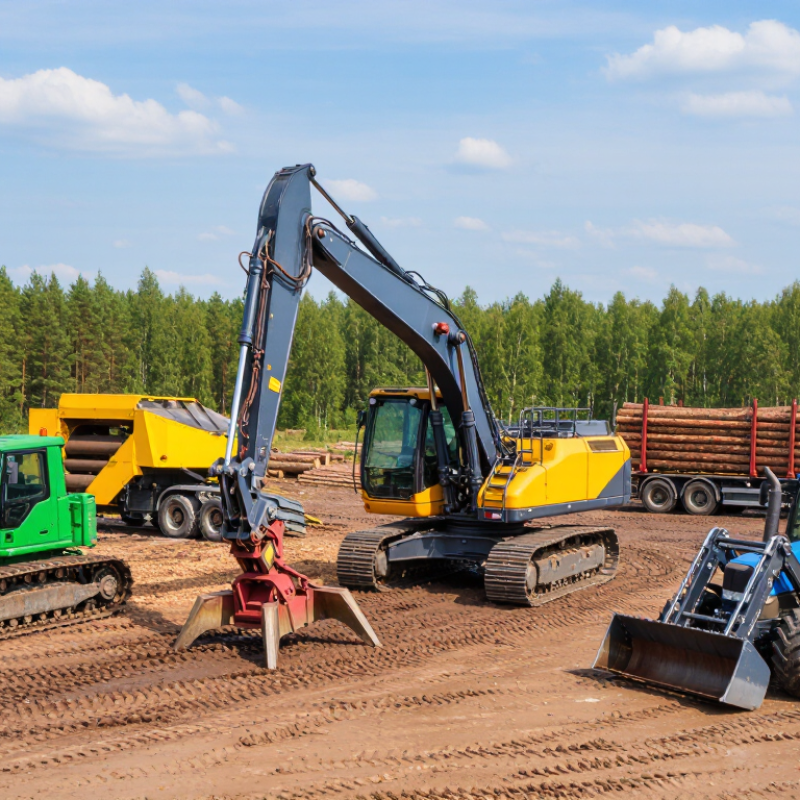
Forestry-equipped excavator Uses an attachment such as a felling head, grapple, or processor head for specialized cutting or handling tasks. Can fell, position, or process trees when fitted with a compatible attachment; the base machine alone is not a harvesting head. Selective removal, roadside work, and sites where an excavator-based setup fits the terrain or work plan. Verify attachment compatibility and inspect the boom, guarding, hydraulic flow, coupler, undercarriage, and attachment wear parts.
Forestry mulcher Grinds brush, small trees, and woody vegetation into chips or mulch. Clears vegetation and residue but generally does not produce merchantable logs or replace a harvester for timber extraction. Right-of-way clearing, site preparation, and vegetation management. Check the rotor, teeth or cutting tools, belts, drive system, guarding, cooling system, and carrier capacity for the attachment.

What Used Equipment Is Used for Processing and Transport?

Used forestry equipment in 2026 is not limited to cutting trees. Processing and transport machines often determine whether harvested timber moves efficiently from the forest to the mill. Common used options include log loaders, chippers, debarkers, forwarders, skidders, grapple trucks, and heavy-duty timber trailers.

A used log loader needs smooth hydraulic movement and a stable boom under load. Check for oil leaks, cracked welds, worn pins, and uneven cylinder motion. Chippers and debarkers require closer attention to knives, rotors, feed rollers, guards, and vibration.

Small defects can become expensive downtime. Very quickly.

For transport, forwarders reduce ground contact by carrying logs on an integrated bunk. Their frames, axles, tires, brakes, and load space deserve careful inspection. Grapple trucks should be tested on both the crane and the truck chassis. Trailer buyers should examine floor beams, suspension parts, lighting, and tie-down points. Service records matter, but they cannot replace a hands-on inspection.

A clean machine may still hide fatigue beneath fresh paint. That is easy to miss. Hour meters can also provide an incomplete picture when maintenance records are poor. Compare operating hours with hydraulic wear, tire condition, and engine response. Purchase decisions should also consider payload limits, road regulations, operator training, and local parts availability. A lower price is not always a saving. Sometimes, the older machine becomes the more expensive choice after several missed shifts.

How Should Buyers Evaluate Used Forestry Equipment in 2026?

Used forestry equipment can look affordable, yet its working history matters more than its paint. Common choices include skidders, forwarders, harvesters, loaders, and chippers. Buyers should match each machine to terrain, tree size, haul distance, and expected production. A compact loader may suit a small operation, while a heavy skidder can waste fuel on sensitive ground.

Begin with maintenance records, hour-meter readings, and previous repair invoices. Do not trust operating hours alone. Inspect cold-start behavior, exhaust color, oil leaks, hydraulic response, and unusual vibration. Check the boom pins, frame welds, grapple, tires, tracks, and undercarriage closely. Small cracks can become expensive failures. It happens.

A practical inspection should include a working demonstration under load. Watch whether the engine holds power during climbing or cutting. Test brakes, steering, lights, alarms, and emergency controls. Ask how the machine was stored during winter and whether water entered electrical connections. Independent fluid analysis can reveal metal wear before a breakdown becomes visible. Service intervals should match the machine’s technical manual, not only the seller’s memory.

Remote inspections are risky. Photos rarely show worn bushings or damaged cooling fins. If records are incomplete, reduce the offer or budget for immediate repairs. That is not pessimism; it is cost control. Buyers should also verify transport limits, operator training needs, and applicable environmental requirements in their region. A second opinion from an experienced mechanic may feel slow, but it often protects production time and cash flow.

What Are the Top Used Forestry Equipment Types in 2026?

Relative buyer-interest index and evaluation priority for major used forestry equipment categories. The index is a practical 2026 planning benchmark, not a company or brand ranking.

How should buyers evaluate used forestry equipment? Prioritize verified service records, operating hours, engine and hydraulic condition, undercarriage or drivetrain wear, attachment condition, safety and emissions compliance, parts availability, and total ownership cost. A lower purchase price may not be economical if major repairs or extended downtime are likely.