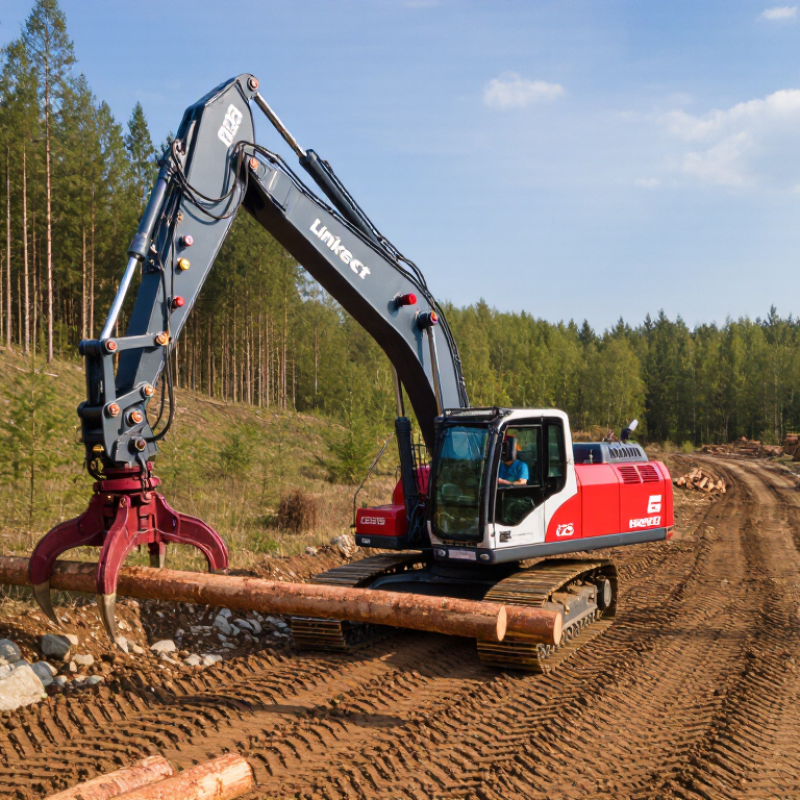
Choosing link belt forestry equipment in 2026 requires more than comparing horsepower and purchase prices. Forest conditions, operator skill, transport limits, and service support can change the right decision. A machine working on steep Appalachian slopes needs different stability and reach than one handling plantation thinning on level ground. The best choice begins with the job, not the brochure.
This guide examines how link belt forestry machines perform in real working conditions. It considers hydraulic response, undercarriage strength, cab visibility, fuel use, attachment compatibility, and operator comfort. It also looks at dealer access, parts availability, warranty terms, and documented maintenance history. A clean-looking used machine may still hide worn pins, weak pumps, or neglected cooling systems. That detail matters.
Experience from contractors shows that productivity is only one measure. Downtime can erase a small fuel saving within days. Still, no machine is perfect. A larger excavator may offer useful lifting capacity but create higher transport and operating costs. A compact model may maneuver well but struggle with oversized timber or dense slash. Buyers should question manufacturer claims, inspect machines in person, and request service records whenever possible. Independent technicians can provide valuable assessments, although their opinions may differ. That uncertainty deserves attention.
The following sections offer a practical framework for selecting link belt forestry equipment in 2026. They focus on dependable performance, responsible purchasing, and safer daily operation. Local terrain and regulations remain important. So does honest self-assessment. A machine chosen for image rather than workload can become an expensive mistake.
Forestry work starts with the job, not the machine catalog. FAO’s Global Forest Resources Assessment 2020 records about 4.06 billion hectares of forest worldwide. Conditions vary sharply between plantations, steep hillsides, and mixed natural stands. FAO trade data also places global roundwood production above 3.9 billion cubic metres in 2023. That scale demands careful equipment matching.
A 20–25-ton tracked excavator suits thinning, roadside sorting, light processing, and selective removal. It usually offers easier transport and lower ground pressure. Choose a 30–40-ton class for full-tree handling, deep stumps, dense hardwood, or demanding mulching attachments. More mass improves stability, but it does not automatically improve production. A 20-ton machine cannot safely lift 20 tons at full reach. Lift charts, counterweight, hydraulic flow, and attachment weight matter more than the label.
Field experience suggests checking the worst task, not the average task. Measure slope, soil softness, timber diameter, travel distance, and daily attachment hours. The United States Forest Service’s Forest Products Annual Market Review shows changing harvest volumes and product mixes across regions. That variation makes one-size purchasing risky. Oversizing can waste fuel and increase transport costs. Undersizing can cause overheating, unstable lifting, and slow cycle times. My own rule is imperfect: select the smallest class that handles the heaviest repeated task, then verify it with the manufacturer’s rated lift chart and local service data.
Choosing forestry equipment in 2026 should begin with comparable evidence, not brochure impressions. ISO 14396 ratings provide a consistent reference for engine power under defined test conditions. They help buyers compare machines across manufacturers. Yet rated power is not the power reaching the attachment. Hydraulic losses, pump settings, cooling demands, and altitude can reduce working output. Ask for the test standard, rated speed, and applicable configuration. A higher number can still produce slower work. That is a practical warning.
Cycle-time data shows what the operator achieves at the stump, landing, or roadside. Record repeated loading, swinging, cutting, or sorting cycles with the same material and reach. Measure productive minutes, not the entire shift. A 25-second cycle may sound impressive, but delays, repositioning, and full-bucket limits change the hourly result. Use at least 20 consistent cycles, then document unusual interruptions honestly. Field trials I have reviewed often expose gaps between controlled demonstrations and wet, uneven ground. Real conditions matter.
Pair ISO power with cycle time, payload, fuel use, and operator feedback. Calculate tonnes per productive hour, then compare fuel per tonne. Keep soil, timber size, slope, and attachment settings documented. Small details matter. A machine with lower rated power may win when its hydraulics respond smoothly and its swing recovery is quick. Do not treat one test day as final proof. Weather, operator skill, and maintenance can distort results. I would repeat testing after filter service and track-tension checks. The result may challenge the original shortlist, which is useful.
When choosing link belt forestry equipment in 2026, compliance should guide the purchase, not decorate the brochure. Start with the engine plate, emissions label, and complete conformity documents. For equipment sold in the United States, confirm EPA Tier 4 Final status for the exact engine family. For European work, check EU Stage V certification and the correct non-road engine category. These standards address emissions, but they do not prove safe operation. Ask for regeneration instructions, diagnostic access, and service records. A missing document is a warning. Small detail, big consequence.
OSHA 1910.266 adds a separate safety test for logging operations in the United States. It does not certify the machine. It establishes employer duties for training, protective equipment, maintenance, and work practices. Review guarding, emergency controls, operator visibility, seat-belt systems, and inspection procedures. Training must match the machine, terrain, attachments, and cutting hazards. Check that the manual explains lockout steps before clearing jammed material. Walk around the equipment before purchase. Look for cracked welds, hydraulic leaks, damaged steps, and worn pins. A clean cab can hide neglected hydraulics. A dealer’s verbal promise is not enough; request dated inspection evidence. Here is the uncomfortable part: a compliant engine can still sit inside a poorly maintained machine. Have a qualified safety professional compare the equipment, worksite, and current local requirements before signing. Rules and equipment configurations change.
A practical, brand-neutral screening table for selecting forestry equipment and verifying emissions, safety, documentation, and operating suitability.
| Equipment Category | Typical Application | Indicative Operating Weight | Power and Configuration Check | EPA Tier 4 Final Verification | EU Stage V Verification | OSHA 1910.266 and Job-Site Checks | 2026 Buying Decision |
|---|---|---|---|---|---|---|---|
| Forestry Excavator | Road construction, site preparation, ditching, loading, and attachment work. | Approximately 20–35 metric tonnes, depending on guarding, undercarriage, boom, and attachment. | Confirm net power, hydraulic flow, auxiliary-circuit pressure, lifting chart, tail-swing configuration, and attachment compatibility. | Request the engine emissions label, engine family identification, and the U.S. EPA Certificate of Conformity for the exact engine model and power rating. | For EU use, verify the engine type-approval documentation under Regulation (EU) 2016/1628 and the applicable Stage V power band. | Provide operator protection, safe access, visibility aids, guarding, maintenance procedures, and training appropriate to the logging operation. OSHA 1910.266 applies to covered logging operations, not merely to a machine model. | Best all-round base machine Choose when several attachments and frequent transport between sites are required. |
| Feller Buncher | Mechanized felling and bunching of trees in production harvesting. | Approximately 20–35 metric tonnes, with weight strongly affected by head size and guarding. | Check cutting-head diameter range, hydraulic flow, carrier stability, ground clearance, slope limits, and rollover-protection features. | Confirm the installed engine is certified for the machine’s destination market; do not rely only on a “Tier 4” sales description. | Confirm the engine label and declaration or type-approval evidence identify Stage V compliance for the exact engine installation. | Implement written procedures for falling, work-zone control, escape routes, machine separation, hazard-tree assessment, and communication. Operators must be trained for the specific equipment and task. | High-production option Prioritize stability, visibility, guarding, and service access over maximum horsepower alone. |
| Grapple Skidder | Extraction of whole trees or tree-length material from the stump area to a landing. | Approximately 15–25 metric tonnes, depending on winch, grapple, blade, tires, and protective structure. | Evaluate drawbar pull, hydraulic grapple capacity, tire or track configuration, winch capacity, frame articulation, and slope performance. | Verify the engine family certificate, emissions label, after-treatment system, and required diesel exhaust fluid system where applicable. | Check Stage V documentation, particulate-control equipment, exhaust routing, and any operating restrictions for the intended EU country. | Assess protection from rollover and falling objects, seat-belt use, access steps, machine spacing, cable or grapple hazards, and daily inspection requirements. | Terrain-dependent Select only after matching traction, ground pressure, and stability to the site’s slope and soil conditions. |
| Forwarder | Carrying cut logs from the forest to a roadside landing while reducing ground contact by the load. | Approximately 15–25 metric tonnes, including load capacity and configuration differences. | Compare legal payload, bunk length, crane reach, hydraulic lifting capacity, ground clearance, bogie design, and loaded stability. | Obtain the exact engine certificate and confirm that any replacement engine or repower retains the required emissions configuration. | Verify Stage V type approval for the installed engine and confirm that the machine’s exhaust and after-treatment arrangement is approved as installed. | Control loading zones, suspended-load exposure, travel routes, slopes, machine spacing, and communication. Inspect brakes, steering, tires or tracks, lights, and access systems. | Low-impact extraction choice Often preferred where payload efficiency and reduced soil disturbance are more important than tree-length extraction. |
| Tracked Harvester | Felling, processing, and sorting on steep, soft, or difficult terrain. | Approximately 25–45 metric tonnes, depending on carrier, processing head, guarding, and counterweight. | Review rated lift capacity at working radius, swing torque, hydraulic cooling, head compatibility, slope capability, and undercarriage durability. | Confirm certification for the exact engine family, rated power, software configuration, and after-treatment package; verify regeneration and diagnostic procedures. | Confirm the Stage V engine approval and ensure replacement filters, catalysts, sensors, and other emissions-related parts remain compatible with the approved system. | Use a site-specific risk assessment for steep slopes, falling trees, suspended loads, machine rollover, emergency access, and work-zone exclusion distances. | Steep-terrain candidate Choose when reach, stability, and controlled maneuverability justify higher capital and operating costs. |
| Log Loader | Sorting, stacking, loading trucks, and handling logs at landings or processing sites. | Approximately 20–35 metric tonnes, depending on boom length, grapple, counterweight, and undercarriage. | Compare lift charts at maximum reach, grapple volume, cycle time, slew performance, cab elevation, and truck-loading reach. | Check the engine label and certificate for the precise power class. Confirm that the exhaust after-treatment is not removed, bypassed, or modified. | Verify Stage V approval for the engine and document maintenance intervals for diesel particulate filters, oxidation catalysts, and selective catalytic reduction systems where fitted. | Control pedestrian access, truck positioning, suspended loads, log pile stability, communication signals, and safe cab access. Maintain required operator training and inspection records. | Landing-focused Prioritize lift-chart performance and visibility rather than maximum travel speed. |
| Mobile Chipper | Processing branches, tops, and low-grade material into chips near the harvest site. | Approximately 5–20 metric tonnes for mobile units; size varies substantially by feed opening and chassis. | Check feed-opening dimensions, rated throughput, infeed controls, discharge reach, knife or anvil access, and transport configuration. | Verify the engine certificate and ensure the emissions system remains intact during stationary or low-load operation. | Check Stage V status for the installed engine and confirm noise, transport, and local operating requirements in the destination jurisdiction. | Apply guarding and lockout procedures around feed rollers, chipping mechanisms, discharge areas, and maintenance points. OSHA 1910.266-related logging controls should be integrated with the chipper risk assessment where applicable. | Maintenance-sensitive Choose based on feed safety, service access, chip quality, and verified throughput—not engine power alone. |
| Transport and Support Equipment | Moving machines, fuel, attachments, tools, and personnel between work areas. | Varies by trailer, truck, service vehicle, and payload configuration. | Confirm gross vehicle weight rating, axle loads, tie-down points, ramp capacity, braking, lighting, and route permits. | Verify the emissions status of the truck or nonroad engine separately; a compliant forestry machine does not automatically make the transport unit compliant. | Check the separate road-vehicle or nonroad-engine rules applicable to the country and vehicle category. | Use secured loads, safe loading procedures, inspection records, traffic controls, and worker separation from moving equipment. | Often overlooked Include logistics equipment in the compliance review and total cost of ownership. |
| Replacement Engine or Repower | Extending the service life of an existing forestry machine. | Not applicable; compatibility depends on the original machine and engine installation. | Match rated power, torque curve, cooling capacity, mounts, controls, wiring, hydraulics, exhaust routing, and software integration. | Do not assume the replacement is compliant. Verify the replacement-engine rules, emissions label, certificate, and installation requirements for the machine and jurisdiction. | Confirm whether the repower requires new type-approval evidence, conformity documentation, or restrictions under the applicable EU rules. | Reassess guarding, noise, heat, exhaust exposure, emergency shutdown, maintenance access, and operator instructions after modification. | High-documentation risk Obtain written confirmation from the engine supplier and qualified installer before purchase. |

How to Choose Link Belt Forestry Equipment in 2026?
Select Guarding, Undercarriage, and Attachments for ISO 17235 Forestry Risks
Forestry equipment faces falling branches, rolling logs, hidden stumps, and unstable ground. Select guarding that protects the cab, lights, hydraulic lines, and vulnerable service points. Mesh should provide visibility without leaving wide openings for debris. On a wet slope, strong guarding matters, but poor visibility can create another hazard. Check weld quality, access panels, and replacement costs before purchase.
The undercarriage must match the terrain, not just the machine’s rated power. Wide tracks can reduce ground pressure on soft soil. Reinforced links, protected rollers, and effective track tensioning support long shifts around rocks and roots. Inspect the frame after a trial cycle. Small cracks often reveal stress before a major failure. Use ISO 17235 as a risk reference, then confirm the current edition and applicable regional requirements.
Attachments should suit the wood diameter, operating angle, and hydraulic flow. A grapple needs controlled movement and strong guarding around hoses. A mulcher requires adequate cooling, debris protection, and a carrier with stable balance. Quick couplers save time, but only when locking indicators are clear and regularly checked. I would not choose the largest attachment automatically. It may reduce control and increase wear. Ask operators to test the setup in real conditions. Their feedback can expose weaknesses that a specification sheet misses.
Select guarding, undercarriage, and attachments according to the hazards identified in the worksite risk assessment and the applicable requirements of ISO 17235 and local forestry regulations.
The chart uses a five-point screening scale for equipment selection: 1 means lower priority and 5 means critical priority. Guarding should protect operators from moving and rotating parts, the undercarriage should match terrain, slope, and ground conditions, and attachments should be selected for secure coupling, hydraulic compatibility, visibility, and the intended forestry task. Confirm all specifications in the equipment documentation before purchase or operation.
Calculate five-year cost, not just purchase price.
The U.S. Energy Information Administration reported an average 2024 diesel price of about $3.76 per gallon. Use your local price instead. Assume 1,200 working hours yearly and 6.5 gallons per hour. Fuel then costs approximately $146,600 over five years. That estimate changes quickly. A two-gallon difference adds nearly $45,000.
My first spreadsheet ignored downtime. It looked professional. It was incomplete. Record service tickets, waiting hours, and replacement-machine costs. If uptime falls by 5%, the machine loses 300 operating hours across five years. At a $90 hourly production contribution, that gap equals $27,000. Industry cost-recovery guidance separates ownership costs from operating costs, which prevents this common mistake.
Keep parts data equally practical. Use the last 24 months of invoices, hydraulic components, filters, undercarriage items, and labor. A $14 parts reserve per hour adds $84,000 over five years.
Resale needs evidence, not optimism.
Compare auction records, dealer appraisals, and published used-equipment market reports for similar age, hours, and condition. The U.S. EPA’s 2024 emissions-factor data can also support fuel-related operating estimates. Suppose purchase cost is $280,000 and expected resale is $110,000. Fuel, parts, downtime, and depreciation then produce a more realistic ownership picture.
Condition still matters. Mud, salt, and neglected lubrication can destroy resale value faster than expected. Watch the assumptions. Recheck them quarterly.